
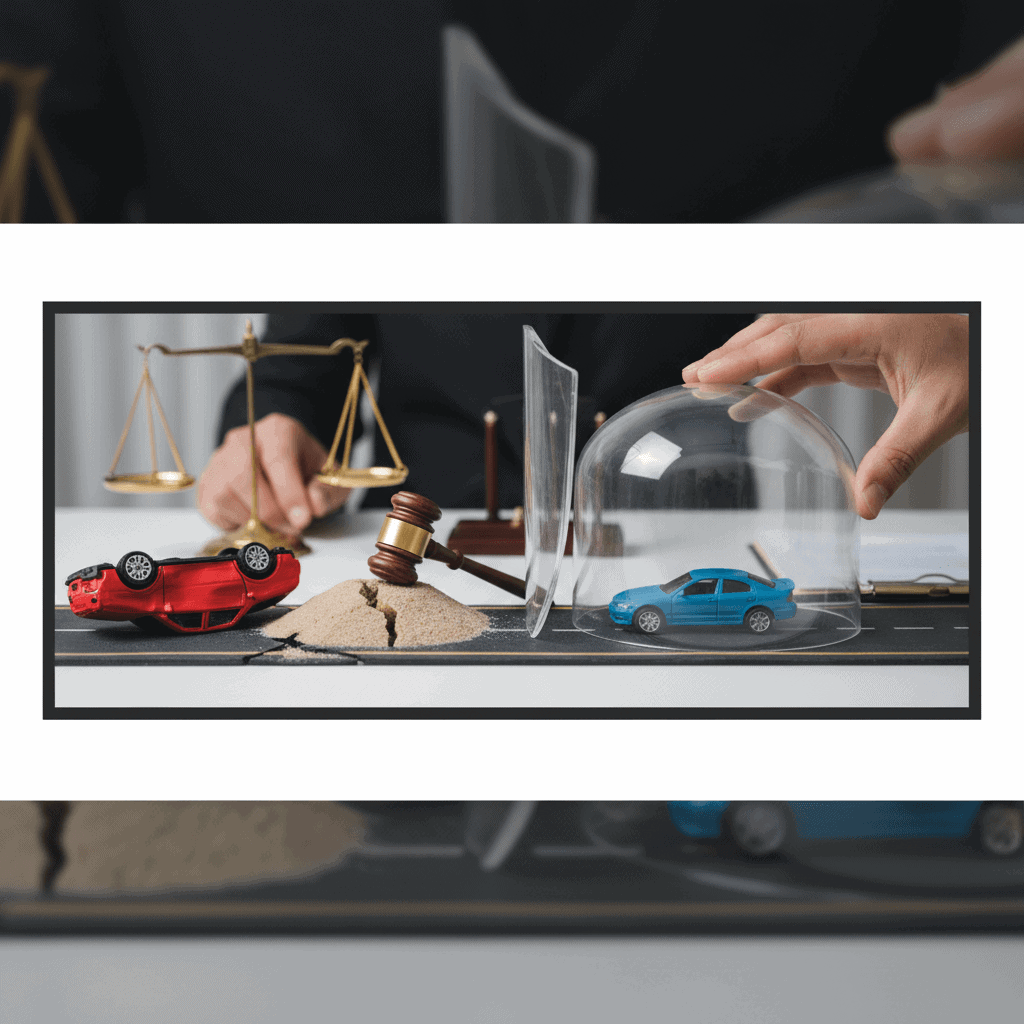
Avoid Losing Your Accident Claim Due to Shared Fault

Experiencing an accident can feel overwhelming. The physical pain and emotional stress are hard enough, but then you face the complex process of an insurance claim. Many people assume if they were involved in an accident, they will automatically receive compensation. This is often not the case.
I have seen countless individuals struggle because they did not understand how shared fault can impact their ability to recover damages. You might think the other driver was completely to blame, but the legal system sometimes finds that multiple parties share responsibility. This can significantly reduce the amount of money you receive.
It is vital to understand the rules and steps to take to avoid losing your accident claim due to shared fault. My goal here is to give you clear guidance. I want to help you protect your legal rights and maximize your chances of a successful claim.
Understanding Comparative Negligence in Accident Cases
When an accident happens, determining who is at fault is never straightforward. States use different legal principles to assign fault when more than one person contributes to an accident. This system directly influences your eligibility for compensation.
The concept of shared fault is critical because it means your own actions, even minor ones, can affect your claim. I often explain this to clients by emphasizing that every detail matters. Even a small misstep on your part could reduce your settlement or even prevent you from recovering anything at all.
Most states operate under some form of comparative negligence. This allows you to recover damages even if you were partly at fault. However, the amount you can recover typically decreases in proportion to your assigned fault. Some states have stricter rules. For example, in pure comparative negligence states, you can recover damages even if you are 99% at fault, but your recovery is just 1% of your total damages.
Other states follow modified comparative negligence rules. These often set a threshold, like 50% or 51%. If your fault exceeds this percentage, you cannot recover any damages. It is a critical distinction that can make or break your claim. You must be aware of the specific laws in your jurisdiction.
How Shared Fault Rules Work
Shared fault rules define how courts and insurance companies assign percentages of blame. Imagine a scenario where two cars collide. One driver was speeding, and the other made an illegal turn. A court might decide the speeding driver was 60% at fault and the turning driver was 40% at fault.
If the turning driver suffered $10,000 in damages, under a pure comparative negligence system, they could still recover $6,000. This is because their fault reduced their payout by 40%. In a modified comparative negligence state with a 51% bar, the turning driver would still recover because their fault was below 51%.
The rules are designed to ensure fairness. They ensure that each party bears financial responsibility in proportion to their contribution to the accident. This is why thorough investigation and strong legal arguments are so important. I always work to minimize our clients’ attributed fault.
Evidence plays a huge part in this process. Police reports, witness statements, and accident reconstruction expert opinions all help determine fault percentages. Without solid evidence, proving that the other party was more at fault becomes very difficult.
Different State Approaches to Shared Fault
Understanding the specific rules in your state is absolutely vital. This is because the outcome of your claim can vary wildly depending on whether your state uses pure comparative negligence, modified comparative negligence (50% bar), or modified comparative negligence (51% bar). I always advise clients to learn about their state’s laws.
In pure comparative negligence states, any party can recover damages regardless of their percentage of fault. This means even if you are mostly to blame for an accident, you can still collect a portion of your damages from the other party. The amount is simply reduced by your fault percentage. I believe this system offers the broadest protection for injured individuals.
Modified comparative negligence with a 50% bar means you cannot recover any damages if your fault is determined to be 50% or greater. If you are 49% at fault, you can still recover 51% of your damages. This rule is often called the “50% rule.” It sets a clear limit that many people find straightforward.
The other common modified comparative negligence rule is the 51% bar. Here, you cannot recover any damages if your fault is determined to be 51% or greater. If you are 50% at fault, you can still recover 50% of your damages. This is sometimes called the “51% rule.” These subtle differences matter greatly. For in-depth information about these varying state laws and how they apply, I recommend reading about understanding comparative negligence. It is a complex area of law.
Understanding What Contributes to Shared Fault
It is easy to point fingers after an accident. However, many factors can contribute to shared fault, and understanding them helps you protect your claim. Knowing what behaviors or conditions might lead to a finding of shared fault is crucial for accident victims.
I have seen claims weakened because a client was unaware their own actions could be viewed as contributory. Things like distracted driving, failing to follow traffic laws, or even not wearing a seatbelt can all play a role. These elements might seem minor at first glance, but they carry significant weight in legal proceedings.
Even factors outside your direct control can sometimes be considered. For example, if your vehicle had a known mechanical issue you failed to address, and that issue contributed to the accident, it could be a point of shared fault. This is why a detailed review of all circumstances surrounding the accident is always necessary. We look at everything.
The insurance adjusters and opposing lawyers will certainly look for anything they can use to assign you a percentage of fault. So, it is important for us to be proactive in identifying and defending against these arguments.
Common Driver Actions Leading to Shared Fault
Many everyday driving behaviors can be flagged as contributing to shared fault in an accident claim. I advise clients to be mindful of these actions, not just for safety but for protecting their legal standing.
- Distracted Driving: Using a cell phone, eating, or even adjusting the radio can take your eyes off the road. If your distraction contributed to the accident, you could be assigned partial fault.
- Speeding: Driving over the speed limit, even slightly, often leads to shared fault findings. It shows a disregard for safe driving practices.
- Failing to Yield: Not yielding the right-of-way when required is a common cause of accidents and a major factor in shared fault.
- Improper Lane Change: Failing to signal, changing lanes unsafely, or cutting off another driver can directly contribute to a collision.
- Driving Under the Influence: Operating a vehicle while impaired by alcohol or drugs nearly always results in a finding of substantial fault.
- Following Too Closely: Tailgating reduces your reaction time. If you cannot stop in time to avoid a collision, you might be held partly responsible.
These actions are not exhaustive, but they represent some of the most frequent reasons why drivers are found to share fault in an accident. Always strive for safe driving habits to protect yourself on the road and in court.
Pedestrian and Cyclist Responsibilities
It is not just drivers who can be assigned shared fault. Pedestrians and cyclists also have responsibilities to follow traffic laws and exercise reasonable care. I have handled cases where pedestrians or cyclists were found partly at fault for their own injuries.
For pedestrians, jaywalking, ignoring “Do Not Walk” signals, or stepping into traffic unexpectedly can lead to shared fault. If a pedestrian crosses a road outside a marked crosswalk, especially at night, they might be considered partly responsible for any resulting accident. They must be predictable and visible.
Cyclists also need to obey traffic signals, use proper lighting at night, and signal turns. Riding against traffic or failing to use bike lanes when available can increase a cyclist’s liability. Many cities have specific ordinances for cyclists, so knowing these rules is important for their safety and for protecting their rights after an accident.
Even if you are not in a car, you have a duty to act safely. When shared fault comes into play for pedestrians or cyclists, it works in a similar way to shared fault for drivers. Their compensation can be reduced based on their percentage of blame. This highlights how shared responsibility extends to everyone on the road.
Gathering Evidence to Protect Your Claim
The moments right after an accident are crucial. What you do and say can significantly impact your claim, especially when shared fault is a concern. I cannot stress enough the importance of acting quickly and methodically to collect evidence.
Every piece of information helps build a stronger case. Pictures, videos, witness contacts, and even your own notes can make a real difference. Without strong evidence, it becomes much harder to refute claims of your partial fault. This documentation is your first line of defense.
It is not enough to just remember what happened. Memories fade and details get confused under stress. Physical evidence, on the other hand, provides objective proof. I always tell my clients to think of themselves as investigators immediately after an accident. Their actions then can directly influence their recovery later.
So, take deep breaths and try to be as thorough as possible. This initial effort will pay dividends when we start to build your case.
Immediate Steps at the Accident Scene
After ensuring everyone’s safety, these steps are critical for gathering evidence and helping to avoid losing your accident claim due to shared fault.
- Call the Police: A police report provides an official record of the accident. It often includes details like date, time, location, and sometimes an initial assessment of fault. This document carries significant weight.
- Exchange Information: Get the other driver’s name, contact information, insurance details, and vehicle license plate number. Do not forget to get their driver’s license number as well.
- Take Photos and Videos: Use your phone to document everything.
- Damage to all vehicles.
- Skid marks on the road.
- Traffic signs or signals.
- Weather conditions.
- Any visible injuries.
- The overall accident scene from different angles.
- Identify Witnesses: Ask anyone who saw the accident for their contact information. Their unbiased account can be invaluable.
- Do Not Admit Fault: Be careful with your words. Do not apologize or say anything that could be interpreted as admitting fault, even if you feel bad. Just stick to the facts.
- Seek Medical Attention: Even if you feel fine, get checked by a doctor. Some injuries do not appear until later. This also creates an official record of your injuries.
Following these steps helps create a solid foundation for your claim. It helps us later piece together exactly what happened and who was responsible.
Documenting Your Injuries and Losses
Thoroughly documenting your injuries and all related losses is just as important as gathering evidence at the accident scene. This directly impacts the compensation you can claim. I advise my clients to keep meticulous records of everything.
Start by keeping a detailed log of your medical treatments. This includes doctor’s visits, physical therapy appointments, prescriptions, and any medical procedures. Save all medical bills and receipts. These documents provide concrete proof of your physical suffering and financial expenses.
Also, track any lost wages if your injuries prevent you from working. Get a letter from your employer confirming your time off and salary. If you own a business, maintain clear records of lost income or opportunities. This is a vital part of your economic damages.
Do not forget to keep records of property damage. Get repair estimates for your vehicle or other damaged property. Take photos of the damage before and after repairs. Every expense related to the accident, from rental car fees to towing costs, should be documented. The more organized you are, the stronger your claim becomes.
The Role of Legal Counsel in Shared Fault Cases
Dealing with an accident claim on your own is difficult enough. But when shared fault becomes an issue, the complexities multiply quickly. This is where experienced legal counsel becomes invaluable. I always tell clients that navigating these waters alone often leads to a significantly reduced settlement or even no compensation at all.
An attorney specializes in accident law. We understand the specific rules and precedents in your state regarding comparative negligence. This knowledge is critical for building a strong defense against claims of your fault. We know how to gather and present evidence effectively, which is key to proving the other party’s liability.
Insurance companies often try to minimize their payouts by shifting blame to the injured party. They have teams of lawyers and adjusters whose job it is to protect their bottom line. Having your own legal advocate means you have someone fighting solely for your best interests. We level the playing field for you.
I find that clients with legal representation consistently achieve better outcomes. This is true even in cases where shared fault is a definite factor. Our goal is always to maximize your recovery while minimizing any assigned fault on your part.
How Attorneys Fight for Your Best Interest
When you hire an attorney, you are not just getting legal advice. You are getting a dedicated advocate who will actively work to protect your rights and fight for the compensation you deserve. I take this role very seriously for every client.
We start by conducting a thorough investigation of the accident. This includes reviewing police reports, interviewing witnesses, and examining physical evidence. We might also bring in accident reconstruction experts to provide a clear picture of how the accident happened. Our goal is to uncover facts that support your position and minimize any shared fault claims against you.
Then we handle all communication with insurance companies. This is a huge benefit because insurance adjusters are trained to get you to say things that can hurt your case. We protect you from making statements that could be used against you. We negotiate directly with them, pushing back against unfair fault assignments and lowball offers.
If negotiations do not lead to a fair settlement, we are prepared to take your case to court. We build a compelling legal argument and represent you in litigation. Having a lawyer means you have someone who understands the legal system and how to present your case effectively to a judge and jury. We are always prepared to fight for justice.
Negotiation Strategies for Complex Claims
Shared fault claims are often complex, requiring careful negotiation strategies. Insurance companies will try to leverage any potential fault on your part to reduce their settlement offer. I use specific tactics to counter these attempts and protect my client’s interests.
First, we meticulously calculate the full extent of your damages. This includes current and future medical expenses, lost wages, pain and suffering, and other non-economic losses. Having a clear and well-supported figure for your total damages strengthens our negotiating position. It allows us to show the insurance company exactly what a fair settlement should look like.
Next, we present a strong case that minimizes your fault and maximizes the other party’s culpability. This involves highlighting key evidence, witness testimonies, and expert opinions that support our view of the accident. We are prepared to refute any arguments the insurance company makes regarding your contribution to the crash. This aggressive approach often leads to better offers.
Finally, we maintain open but firm communication with the insurance adjusters. We push for fair treatment while always being ready to litigate if necessary. This shows the insurance company that we are serious and will not back down. Effective negotiation is a delicate balance of assertion and evidence-based argument. It is a critical skill for any successful accident claim.
Mistakes to Avoid That Weaken Your Position
When you are involved in an accident, it is easy to make mistakes that can severely damage your claim. These errors can unfortunately give the insurance company ammunition to assign you shared fault, which impacts your compensation. I have seen clients inadvertently harm their own cases by not knowing what to avoid.
Understanding these common pitfalls is just as important as knowing what steps to take. Your actions after an accident are scrutinized. So, every decision can either strengthen or weaken your legal standing. My goal is to equip you with the knowledge to protect yourself.
Avoiding these missteps helps ensure that you do not unintentionally sabotage your efforts to recover damages. It protects your ability to focus on healing without added financial stress. Being prepared means being aware of potential traps.
Remember, the insurance company is not on your side. Their priority is to save money, so they will look for any reason to reduce your claim.
Speaking to Insurance Companies Without Counsel
One of the biggest mistakes accident victims make is talking to the other driver’s insurance company without legal representation. I strongly advise against this. Insurance adjusters are trained professionals, and their primary goal is to protect their company’s bottom line. This means they will try to get you to admit fault or make statements that can be used against you.
They might ask you seemingly innocent questions about the accident or your injuries. However, your answers could be twisted or misinterpreted to suggest you were partly to blame. For example, a simple “I’m fine” right after an accident could be used later to argue that your injuries are not severe. This is a common tactic.
Adjusters might also pressure you into accepting a quick, low settlement offer. They know you are under stress and might be eager to resolve things. But accepting an offer too early often means you waive your right to seek additional compensation later, even if your injuries turn out to be more serious than first thought.
It is always best to let your attorney handle all communications with insurance companies. We know what to say and what not to say. We protect you from these tactics and ensure your rights are fully protected throughout the claims process.
Delaying Medical Treatment or Legal Action
Procrastination can be a silent killer for accident claims, especially when shared fault is a factor. Delaying medical treatment or legal action is another common mistake I see. These delays can create significant problems for your case.
When you delay seeking medical attention, the insurance company can argue that your injuries are not directly related to the accident. They might suggest your injuries occurred later or were exaggerated. This weakens the link between the accident and your suffering, making it harder to prove damages. Always see a doctor as soon as possible after an accident, even if you feel okay. Some injuries have delayed symptoms.
Similarly, delaying legal action can also harm your claim. There are strict deadlines, known as statutes of limitations, for filing personal injury lawsuits. If you miss these deadlines, you could lose your right to pursue compensation entirely. Time is of the essence in these situations. I urge clients to contact a lawyer as soon as they can.
A prompt response to both your medical needs and legal options shows diligence. It helps preserve crucial evidence and strengthens the credibility of your claim. Do not let delays jeopardize your chances of receiving a fair settlement.
Protecting Your Right to Compensation
Navigating an accident claim, particularly when shared fault is a factor, requires careful attention to detail and a clear understanding of legal principles. My experience shows that many people lose out on fair compensation simply because they do not know how to protect themselves. Understanding your state’s comparative negligence laws is the very first step in safeguarding your claim. These rules directly impact how much money you can recover. Gathering thorough evidence at the scene and meticulously documenting all your injuries and losses are also non-negotiable steps. These actions provide the foundation for a strong case. They directly refute any attempts to place undue blame on you. I have seen how effective these proactive measures can be in securing favorable outcomes.
Another crucial element is knowing the common mistakes that can weaken your position. Talking to insurance companies without legal representation or delaying medical treatment can inadvertently sabotage your claim. Insurance adjusters are not on your side and will use any statement or delay against you. Having an experienced attorney by your side is vital. We handle all communications, investigate thoroughly, and build a powerful argument to minimize your fault and maximize your compensation. Do not risk your financial future by trying to navigate this complex legal landscape alone. Reach out to a qualified personal injury attorney today. We can help you understand your rights and fight for the full compensation you deserve. Taking prompt action ensures you have the best chance to avoid losing your accident claim due to shared fault.